

Capacity Building for Mobile Health: Producing Technologically-Adept Healthcare Workers in Malaysia
Project No.:
-
AIM-B02-2025A
-
AIM-B02-2025B
-
AIM-B02-2025C
Project Leader:
-
Professor Dr Adina Abdullah
-
Dr Norhamizan Hamzah
-
Dr Teo Chin Ha
Project Collaborator(s):
-
Assoc. Prof. Dr. Amirrudin bin Kasim,
-
Dr. Ng Wei Leik,
-
Prof. Dr. Lee Ping Yein,
-
Dr. Lee Yew Kong
-
Dr. Tong Wen Ting,
-
Dr. Abdullah Al-Hadi bin Ahmad Fuaad,
-
Assoc. Prof. Dr. Pang Yong Kek,
-
Dr Saw Shier Nee ,
-
Assoc. Prof. Dr. Norimichi Hirahara,
-
Dr. Liong Siok Fuang
Graduate Research Assistant(s):
-
Alief Rizkania Illah
-
Zarwina binti Yusoff
Research Assistant(s):
-
Qistina Marsya binti Aziz Zainal
-
Eylia Nurwani bin Ab Razak
-
Muhammad Syafiq bin Ibrahim
-
Yu Hui Ling
This project addresses a critical gap in contemporary healthcare education: while artificial intelligence and digital technologies are rapidly reshaping clinical practice, formal clinical training has not kept pace with these developments. As a result, many clinicians are expected to work with AI-enabled and digital health tools without structured preparation. This initiative responds to that challenge by developing microcredential programmes that equip student clinicians with essential AI and digital health literacy.
The microcredentials provide a structured overview of key technological elements relevant to medicine, including artificial intelligence in healthcare, clinical informatics, and mobile health and telehealth. The emphasis is on practical clinical understanding rather than technical specialisation, enabling clinicians to appreciate how data is generated, how AI supports diagnosis and decision-making, and how digital tools can be safely and ethically integrated into routine care. This ensures that technology strengthens, rather than disrupts, clinical judgement and patient outcomes.
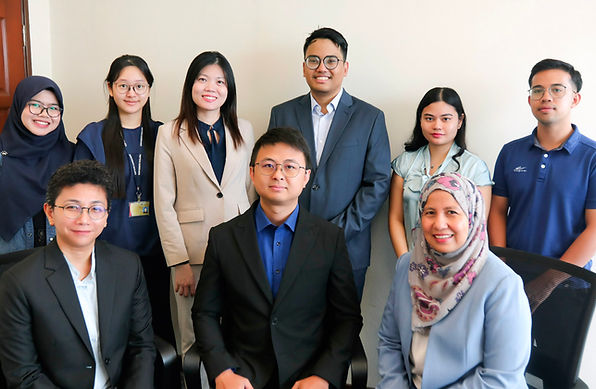
A key strength of the project lies in its capacity-building dimension, particularly for young researchers supporting the programme. Researchers involved come from diverse backgrounds, including AI, bioinformatics, software engineering, and education, bringing technological rigour and pedagogical insight into the clinical education environment. Their involvement supports the development of technology-driven educational content and fosters multidisciplinary collaboration between clinicians and technical experts.
The programme adopts a continuous improvement approach, with ongoing collection of feedback from learners and domain experts to refine course content and ensure relevance as technologies and clinical needs evolve. In parallel, the project actively seeks to engage partners from both the public and private sectors, including healthcare providers, industry players, and medical education organisations, to strengthen alignment with real-world practice and workforce requirements.
Designed as flexible, stackable microcredentials, the programme aligns with industry needs and workforce development priorities within the Ministry of Health (KKM) and supports lifelong learning pathways that may contribute to formal postgraduate qualifications. Overall, the project strengthens both clinical and research capacity, positioning microcredentials as a scalable mechanism for preparing Malaysia’s healthcare workforce for AI-enabled, data-driven practice, while maintaining a strong emphasis on ethics, patient safety, and responsible innovation.
